

What Oplane does
Oplane analyses how your systems interact and where data flows, identifying potential security threats at the architectural level. Unlike scanners that look for code-level vulnerabilities, Oplane focuses on design-level risks such as broken access control, insecure data flows, or a missing authentication boundary. Every finding includes a specific security requirement and implementation guidance tailored to your codebase.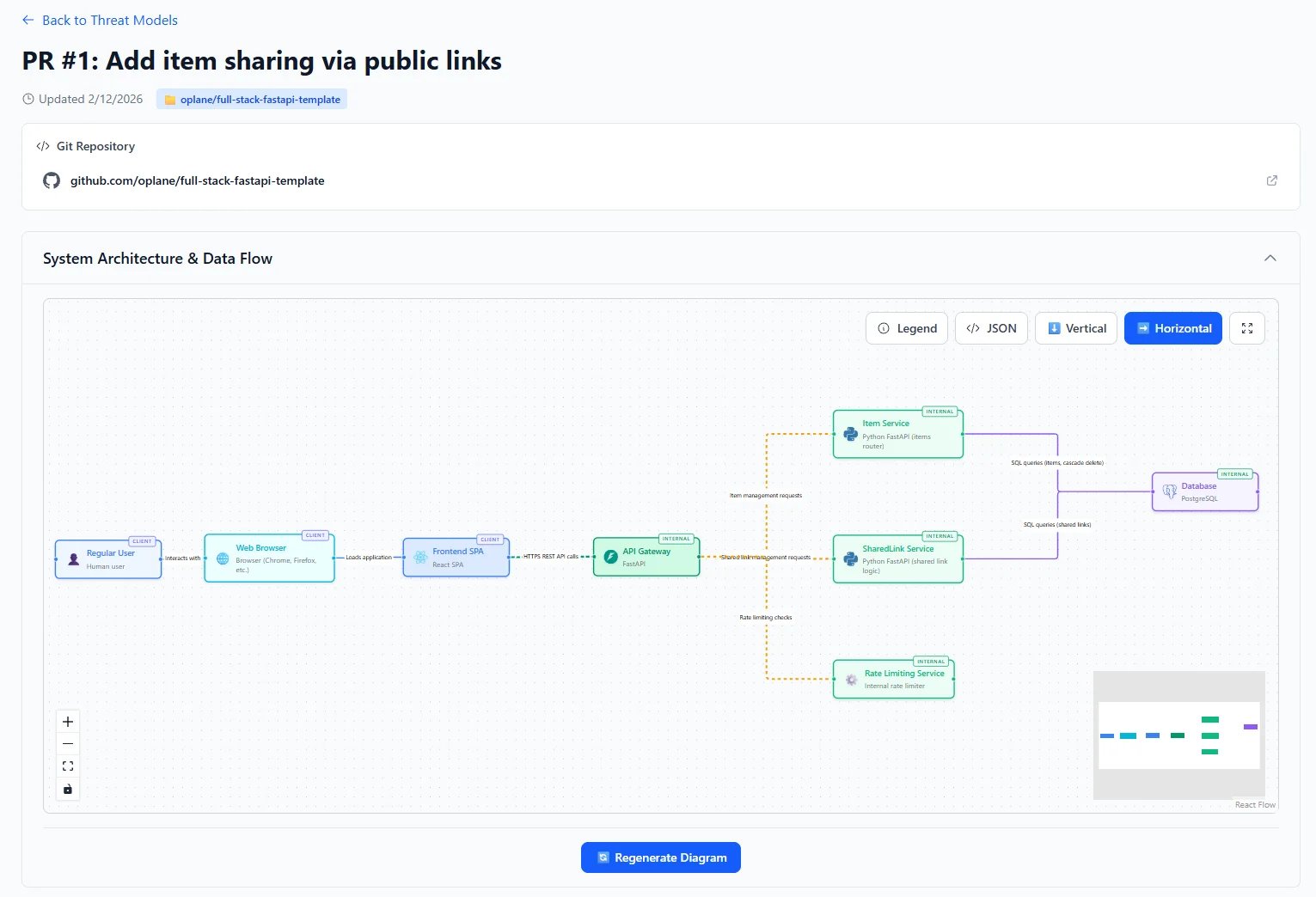
How it fits your workflow
While you code
Connect Oplane to your IDE via MCP. Describe what you’re building and get security requirements in real time, before you even open a PR.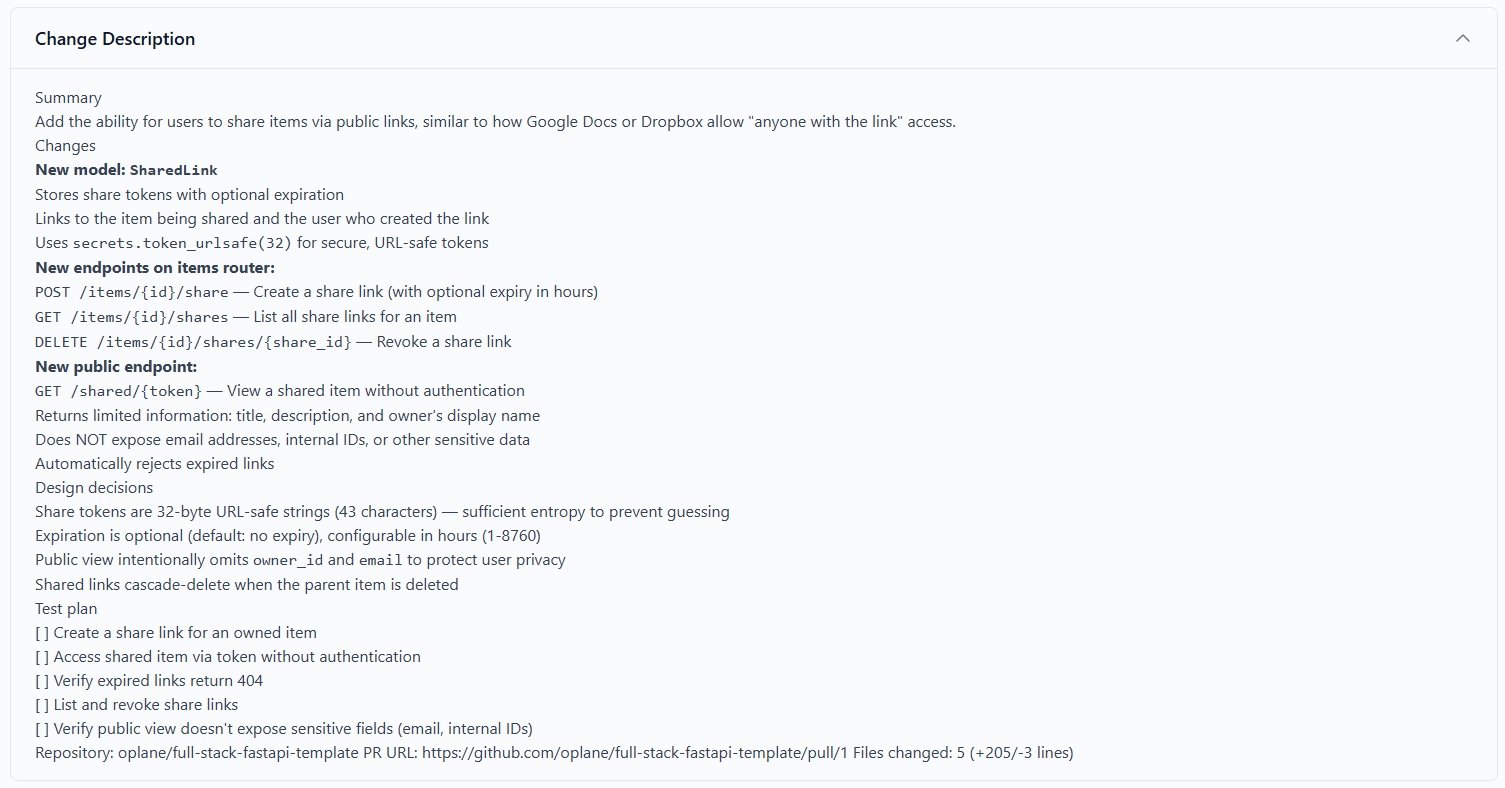
MCP setup
Connect Oplane to your IDE for in-editor threat modeling.
On every PR & MR
Connect your GitHub or GitLab repositories. Oplane reviews every pull request and posts a single summary comment listing the security requirements it found.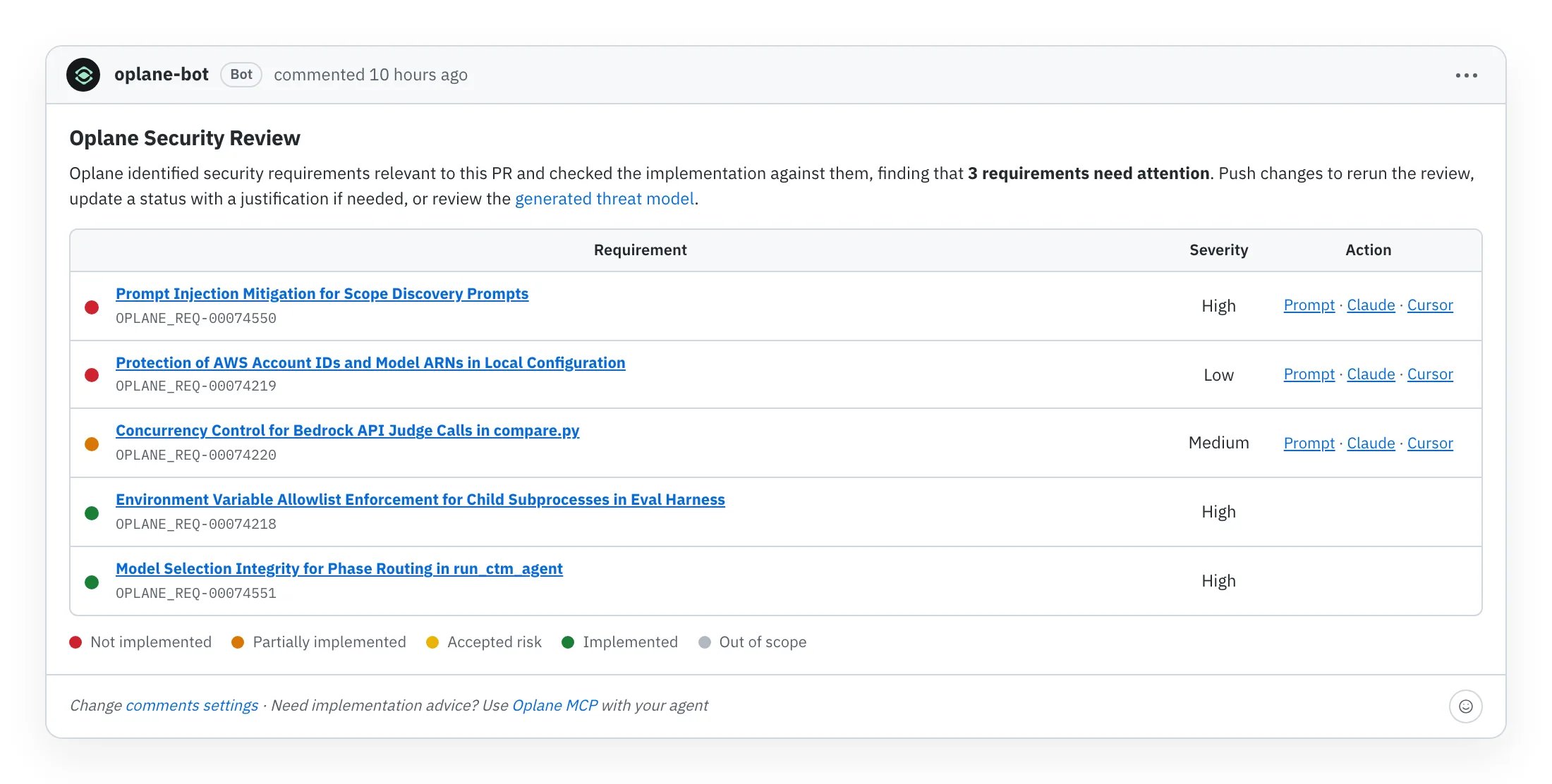
How reviews work
What triggers a review and what it produces.
Review pull and merge requests
Set up reviews on GitHub pull requests and GitLab merge requests.
Organisation security posture
Beyond individual requirements, Oplane gives you a bird’s-eye view of your organisation’s security posture. The analytics dashboard shows how quickly requirements get addressed across your repositories and what share of them are implemented versus still outstanding. It also tracks which teams are actively using Oplane and how that engagement trends over time, and it breaks down where your threat models come from (automated PR reviews versus manual or MCP work) and how much of your scope they cover. Filter by time period, workspace, or team to drill into specific areas. Export data for compliance reporting or security audits.Analytics dashboard
View your organisation’s security posture and adoption metrics.
Get started
Ready to try it? The Quick Start guide walks you through both paths in under 5 minutes.Go to Quick Start
Get security threat modeling running in your workflow in under 5 minutes.